
What is a Pond Skimmer?
<< prev: 2.2 Choosing a Pond Filter: next: 2.2.2 What is Biological Filtration?>>
One of the main problems a pond can face is the build up of organic material in the pond. Organic material includes leaves, sticks, grass, fish waste or anything else that can decay over time. As organic material sinks to the bottom of the pond and decays, ammonia is produced as part of the decaying process. High levels of ammonia are bad for a pond ecosystem and are highly toxic to fish. Although it’s possible to filter ammonia out of the water with a biological filter (which we’ll talk about later), the first step in preventing ammonia build-up is to trap floating organic debris before it can sink and decay. This is where a skimmer comes in.
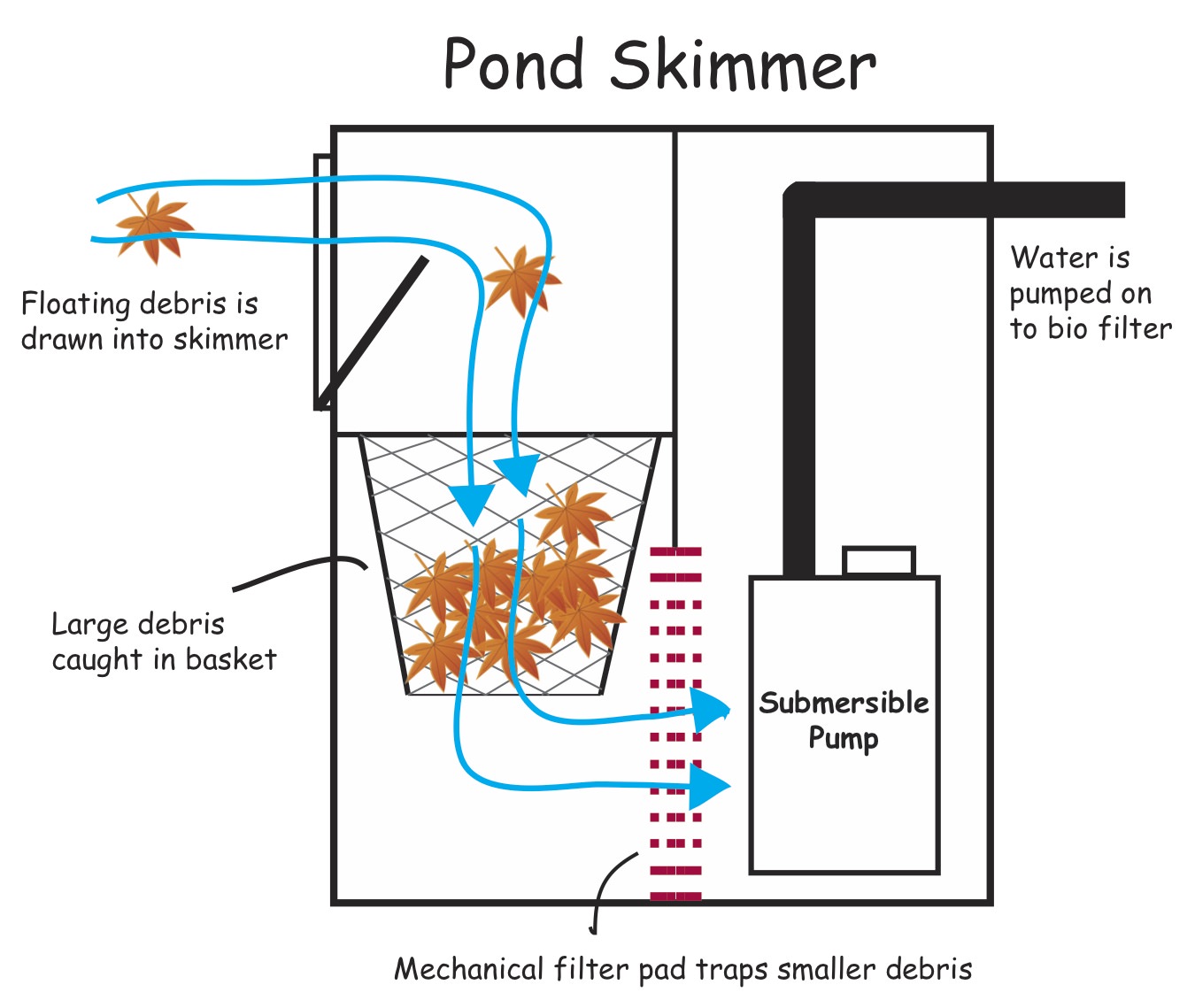
A pond skimmer is a piece of equipment that sits at the edge of a pond, just at the surface of the water. Inside the skimmer is a pump or a pump intake that sucks water from the surface of the pond into the skimmer, bringing with it any floating debris that happens to be nearby. As the water flows into the skimmer, there is usually some kind of a net or screen that will capture floating debris like leaves, which later can be emptied by hand.
SHOP SKIMMERS >>
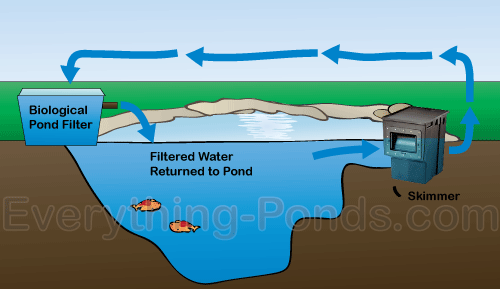
Skimmer Sizing
The key to having an efficiently running skimmer is to first figure out what size of skimmer you will need. There are various sized skimmers available, depending on how much water you need to pump. For example, a smaller skimmer might work from 1000 to 3000 gph (gallons per hour), so if you’re pumping more than that—say around 3500 gph—you’ll have to move up to a skimmer that can handle the increased flow.
SHOP SKIMMERS >>
Skimmer Placement
The location of the skimmer is very important for a well running system. Ideally, you’ll want to place the skimmer on the opposite side of the pond from the waterfall or water return. This is important since a natural water current will be created between the waterfall and the skimmer. If you place them too close together, for example, or on the same side of the pond, you’ll likely end up with dead spots in your pond where the water isn’t circulating as it should.
We have recently acquired two additional types of Skimmer. Labeled as "in Pond Skimmers" these units are designed to be added to an existing pond. Thus, allowing you to place a skimmer into the pond without needing to cut the liner. You can choose from a stand-alone floating unit, or one that sits inside the pond and is connected to a pump. The floating features on both of these units allow them to change with the water level.
Need help choosing pond equipment?